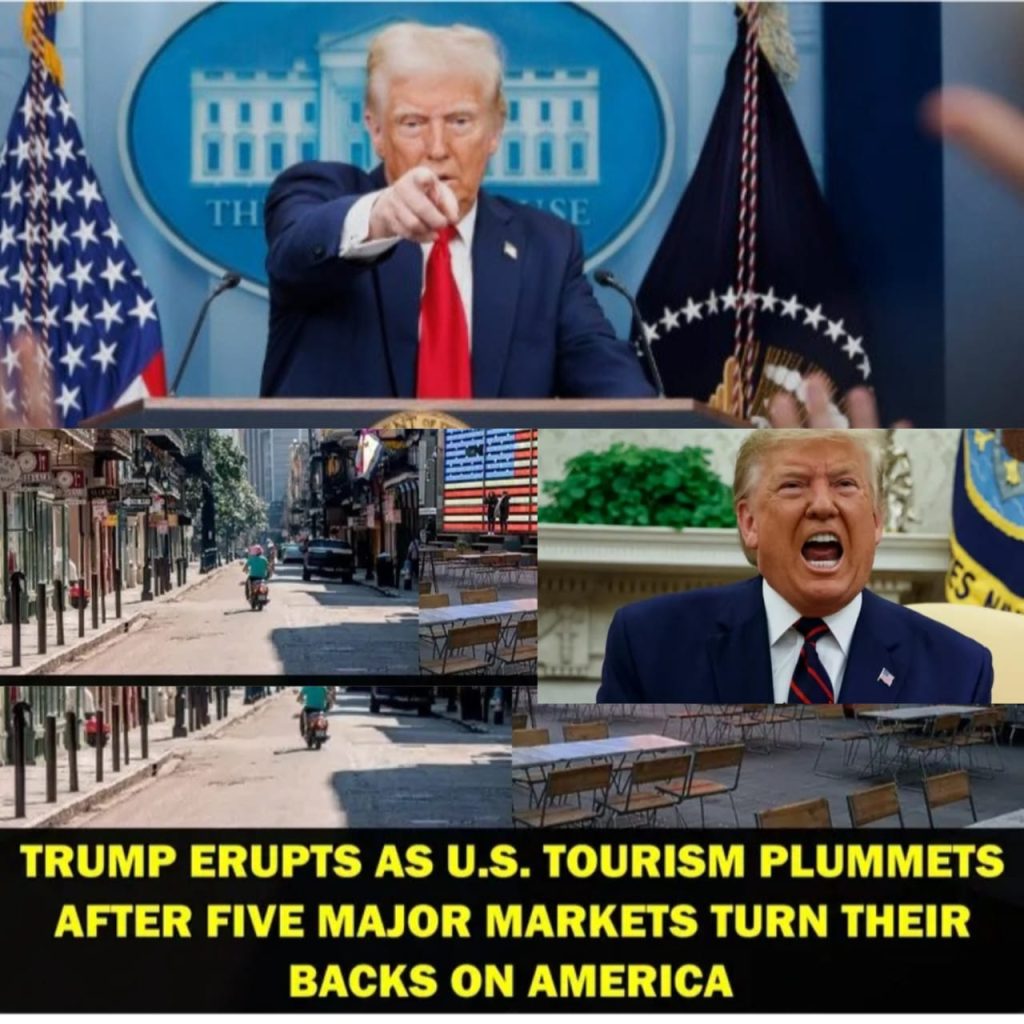

In a dramatized warning scenario circulating online, the U.S. tourism industry is portrayed as teetering on the edge of a historic collapse. The simulation paints a bleak picture: international arrivals plunging, domestic travelers tightening budgets, and iconic destinations like New York City, Miami, Las Vegas, and Los Angeles experiencing shockingly low visitor traffic.
According to simulated indicators, revenues across hotels, restaurants, airlines, and entertainment venues are falling sharply. Behind closed doors, state and city leaders are described as “panicking in silence” as tax income dries up and tourism-dependent jobs hang in the balance.
One expert voice in the scenario warns:
“If this trend continues, the U.S. could face the biggest tourism crash in modern history.”
When the fictionalized report reached Mar-a-Lago, Donald Trump was portrayed as erupting in anger—slamming his hand on the table and shouting:
“Tourists should be flooding into America — not avoiding it! FIX THIS NOW!”
But the simulated advisors point to deeper structural issues: soaring travel costs, regulatory uncertainty, political tensions, and fierce competition from destinations in Canada, Mexico, Europe, and Asia. As one advisor bluntly summarized:
“People choose stability — and right now, they don’t see it here.”
The scenario escalates further. Airlines begin cutting international routes. Hotels quietly close entire floors. Thousands of small businesses—from tour operators to family-owned restaurants—face bankruptcy. Analysts simulate losses reaching into the hundreds of billions, raising a chilling question: what happens if the world truly stops choosing America?
The most explosive claim in the scenario is this:
👉 The five largest global travel markets are “abandoning the U.S.”
And that’s where the story turns from warning… to alarm.
Analysis: Why This Scenario Resonates (Even If It’s a Simulation)
This dramatized scenario works because it taps into real vulnerabilities:
-
Cost Pressure: U.S. travel is increasingly expensive compared to alternative destinations.
-
Perceived Instability: Political polarization and policy uncertainty affect traveler confidence.
-
Global Competition: Countries are aggressively marketing themselves as safer, cheaper, and more welcoming.
-
Tourism Dependency: Major U.S. cities rely heavily on visitor spending to sustain jobs and public services.
Whether or not such a collapse occurs, the simulation highlights a key insight: tourism is driven by perception as much as reality. Once confidence erodes, recovery becomes exponentially harder.